Canyoning & Waterfall Rappelling Near Arenal (2026)
Canyoning and waterfall rappelling get used almost interchangeably in tour marketing, and that causes real confusion when you are trying to book the right one. The two bookable products near Arenal are genuinely different trips with different physical demands, and this guide breaks down exactly what separates them.
La Roca’s three-hour outing and six-hour Gravity Falls are distinct products. Match the route, age window and physical demands before comparing dates. Compare The Options Below.
Plan In Brief: La Roca’s three-hour outing and six-hour Gravity Falls are distinct products. Match the route, age window and physical demands before comparing dates. Choose Your Activity, then confirm your date.
Earlier budget ranges in this guide are planning estimates, not current quotes. Confirm current fees, access rules and the selected tour option before booking.
Canyoning and waterfall rappelling get used almost interchangeably in tour marketing around Costa Rica, and that causes real confusion when you are trying to book the right one. Near Arenal, there are two genuinely different bookable products under this umbrella: a 3-hour waterfall rappelling tour built for beginners, and a 6-hour extreme canyoning circuit built for a more intense day. They share some mechanics but are not the same trip, and picking the wrong one changes your day significantly. Both are run by the same general style of operator common across La Fortuna's adventure tourism scene: small guided groups, professional-grade rope and harness gear, and a route built around a specific canyon or waterfall system rather than an open-ended activity.
Marketing copy across the wider adventure tourism industry does not always draw this line clearly, since "canyoning" is sometimes used as an umbrella term that includes simple waterfall rappelling, and "rappelling" occasionally gets used to describe a full canyoning circuit. Reading the tour's actual included-activities list, rather than relying on the title alone, is the most reliable way to know what you are booking anywhere in Costa Rica, not just with these two specific products.
What Is The Actual Difference Between Rappelling And Canyoning?
Waterfall rappelling means descending a rope down or alongside a waterfall face, one skill repeated at a manageable pace. Canyoning is broader: it strings together rappels, jumps into pools, ziplines, and hiking or swimming between features into one longer circuit. The bookable rappelling tour here is 3 hours and includes 4 waterfall rappels plus pool jumps and two short ziplines. The bookable canyoning tour is 6 hours and centers on a single 150-foot rappel plus a series of cliff jumps ranging 10 to 40 feet.
In practice, that means the rappelling tour is the more approachable, repeat-the-skill format, while the extreme canyoning tour is the longer, more varied, and more physically demanding day. Neither one is "wrong," they are built for different comfort levels and different amounts of time you want to spend in the canyon.
| Detail | Waterfall Rappelling | Waterfall Jumping & Extreme Canyoning |
|---|---|---|
| Price | $105 | $108 |
| Duration | 3 hours | 6 hours |
| Core activity | 4 waterfall rappels, 3 pool jumps, 2 ziplines | 150-foot rappel, cliff jumps of 10 to 40 feet |
| Setting | Arenal River canyon | Gravity Falls, near La Fortuna |
| Rating | 5 out of 5 | 4.7 out of 5 |
| Bookings | 10,601+ | 921+ |
| Includes | Guides, gear, water, riverside lunch at La Roca restaurant, round-trip transport | Guides, gear, lunch, round-trip transport |
| Platform | Viator | Viator |
What Does The Waterfall Rappelling Tour Actually Involve?
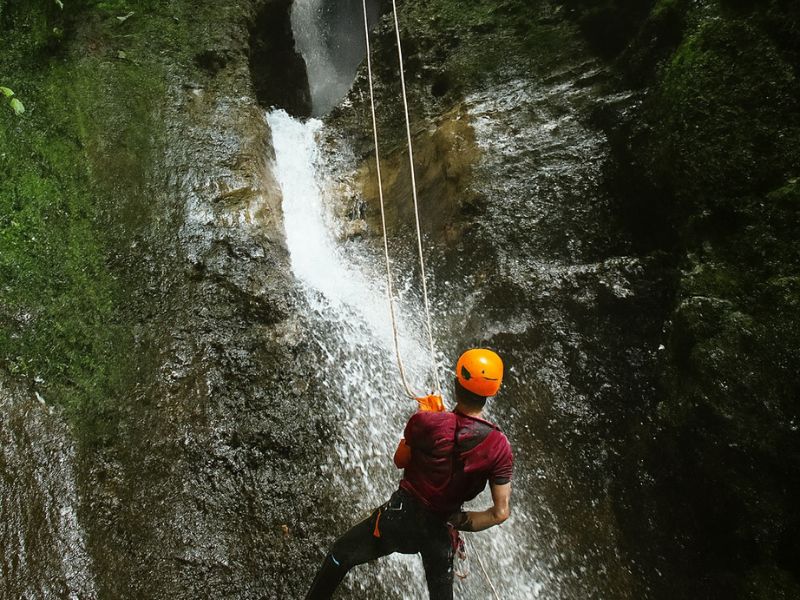
The 3-hour tour takes place in the Arenal River canyon and involves rappelling down 4 separate waterfall walls, jumping into 3 crystal-clear natural pools, crossing the canyon on 2 short ziplines, and walking through shallow water sections surrounded by rainforest. Professional guides give step-by-step instruction, which the listing specifically markets as suited for beginners, and the day wraps with a riverside walk and Costa Rican lunch at La Roca restaurant.
The repetition is a real feature, not a limitation. Four separate rappels means you get the nervous first descent out of the way early and then improve through the second, third, and fourth as your body learns the motion of leaning back against the rope and controlling your own speed. Guides run this format specifically for people who have never rappelled before, and the listing's 5-star rating across more than 10,601 bookings suggests it lands well with that audience.
Round-trip transportation, bilingual guides, water, and all gear are included in the $105 price, so beyond appropriate clothing there is little you need to arrange ahead of time.
The Arenal River canyon setting itself is part of the draw, a corridor of rock walls and moving water cut through rainforest, with the four waterfall walls spaced along the descent rather than stacked one after another. Between rappels, the walk and swim sections give a chance to catch your breath and take in the surroundings before the next descent, which is part of why the tour reads as approachable even for people who arrive nervous about the first rappel.
A typical morning breaks down roughly like this: pickup and transfer to the canyon, a safety briefing and harness fitting once on site, the rappelling and pool-jumping circuit itself, then the riverside walk and lunch at La Roca before the return transfer. Three hours covers the whole loop, so the actual time spent rappelling and swimming is shorter than that once transfers, briefing, and lunch are factored in, similar to how the shorter adventure tours in this area budget time.
What Does The Extreme Canyoning Tour Actually Involve?
The 6-hour tour takes place at Gravity Falls near La Fortuna and centers on rappelling down a 150-foot tropical waterfall into crystalline pools, then a series of jumps from cliffs and waterfalls ranging 10 to 40 feet into deep canyon water, with swimming through jungle wilderness connecting the different sections. It includes professional guides, high-quality safety gear, a Costa Rican lunch, and round-trip transportation, priced at $108.
The 150-foot rappel alone is a substantially longer descent than any single rappel on the shorter tour, and the cliff jumps up to 40 feet require a level of comfort with heights and falling into water that the rappelling tour does not ask for at all. This is the longer, more demanding version of the activity, and the tour's own naming, "extreme canyoning," is an honest description rather than marketing exaggeration.
Gravity Falls as a setting is built around a single dramatic drop rather than the multi-waterfall corridor of the shorter rappelling tour. That single 150-foot descent is the centerpiece the rest of the day builds around, and the cliff-jumping and swimming sections that follow it are what stretch the experience out to a full six hours, moving between pools and jump points through jungle terrain rather than descending waterfall after waterfall in sequence.
At 921+ bookings and a 4.7-star rating, it has a smaller but still solid track record. The lower booking count relative to the rappelling tour likely reflects both its higher physical bar and its longer, more expensive-feeling 6-hour time commitment, which fewer travelers build into a packed Arenal itinerary.
A rough shape for the 6-hour day: transfer to Gravity Falls, gear fitting and a more extensive safety briefing given the added height and jump elements, the 150-foot rappel as the opening centerpiece, then working through the cliff-jump and swim sections before a Costa Rican lunch and the return transfer. The longer format means more built-in rest between sections than the pace of the shorter rappelling tour, since sustaining a full day of physical activity in tropical heat requires pacing that a 3-hour tour does not need to plan around as carefully.
Which One Should You Book: Rappelling Or Canyoning?
Book waterfall rappelling if this is your first time doing anything like it, if you are traveling with teenagers or moderately adventurous adults, or if you only want to commit half a morning to the activity. Book extreme canyoning if you want the longer, more intense version and are comfortable jumping from real height into water repeatedly over a full day.
Plan Your Next Step
Compare Your Complete Costs
La Roca’s three-hour outing and six-hour Gravity Falls are distinct products. Match the route, age window and physical demands before comparing dates.
Booking links may earn us a commission at no extra cost to you. Prices and availability are confirmed by the booking provider.
3 Hours Listed
La Roca Waterfall Rappelling
Choose a shorter guided waterfall descent with supplied technical gear.
- Includes
- Guided canyoning and safety equipment.
- Getting There
- Check your meeting point or pickup with the operator.
Moderate fitness; not wheelchair accessible or recommended for pregnancy, back or serious heart conditions. Confirm minimum age.
Book Waterfall Rappelling6 Hours Listed
Gravity Falls Extreme Canyoning
Choose a more demanding route with waterfall jumping and rappelling.
- Includes
- Guide, gear, lunch and local transport.
- Getting There
- Transportation from La Fortuna.
Operator describes ages 16–55 and good fitness. Not for pregnancy, back problems or mobility impairments.
Reserve Gravity Falls Canyoning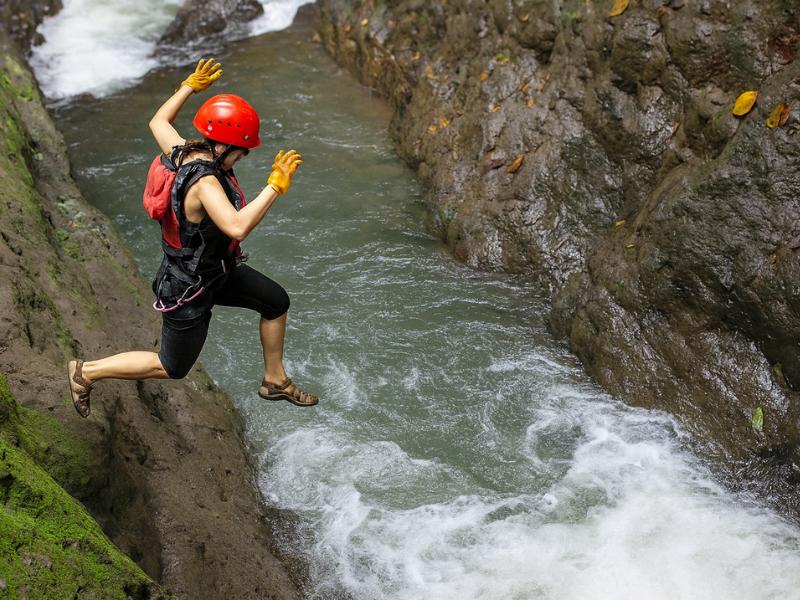
A useful gut check: if the idea of jumping off a 40-foot cliff sounds exciting rather than alarming, canyoning is probably right for you. If it sounds like a hard pass but a 4-step rappelling progression down smaller waterfall walls sounds manageable, rappelling is the better match. There is no wrong answer here, they are genuinely built for different traveler profiles rather than one being a "lesser" version of the other.
Time budget matters too. Six hours is close to half your waking day in La Fortuna, which affects how much else you can fit into that date on your itinerary. Three hours leaves room for a second activity, a hot springs visit, or simply recovery time the same day.
Group dynamics matter more than people expect too. If you are traveling with a mixed group of adventurous and cautious travelers, the rappelling tour is easier to enjoy together since the physical demands are lower and more consistent across the group. Extreme canyoning works best when everyone in your group is genuinely on board with a demanding, all-day physical activity, since a reluctant participant is more likely to have a rough day on the longer, more intense tour than on the shorter one. Talking through expectations as a group before booking, rather than assuming everyone shares the same appetite for six hours in a canyon, saves a lot of friction on the day itself.
Do You Need Experience Or Fitness For Either Tour?
Neither tour requires prior rappelling or canyoning experience, both are guided with step-by-step instruction. Fitness matters more for the 6-hour extreme canyoning tour, which involves swimming through jungle wilderness and multiple physically demanding descents and jumps over a longer day, compared to the more contained format of the 3-hour rappelling tour.
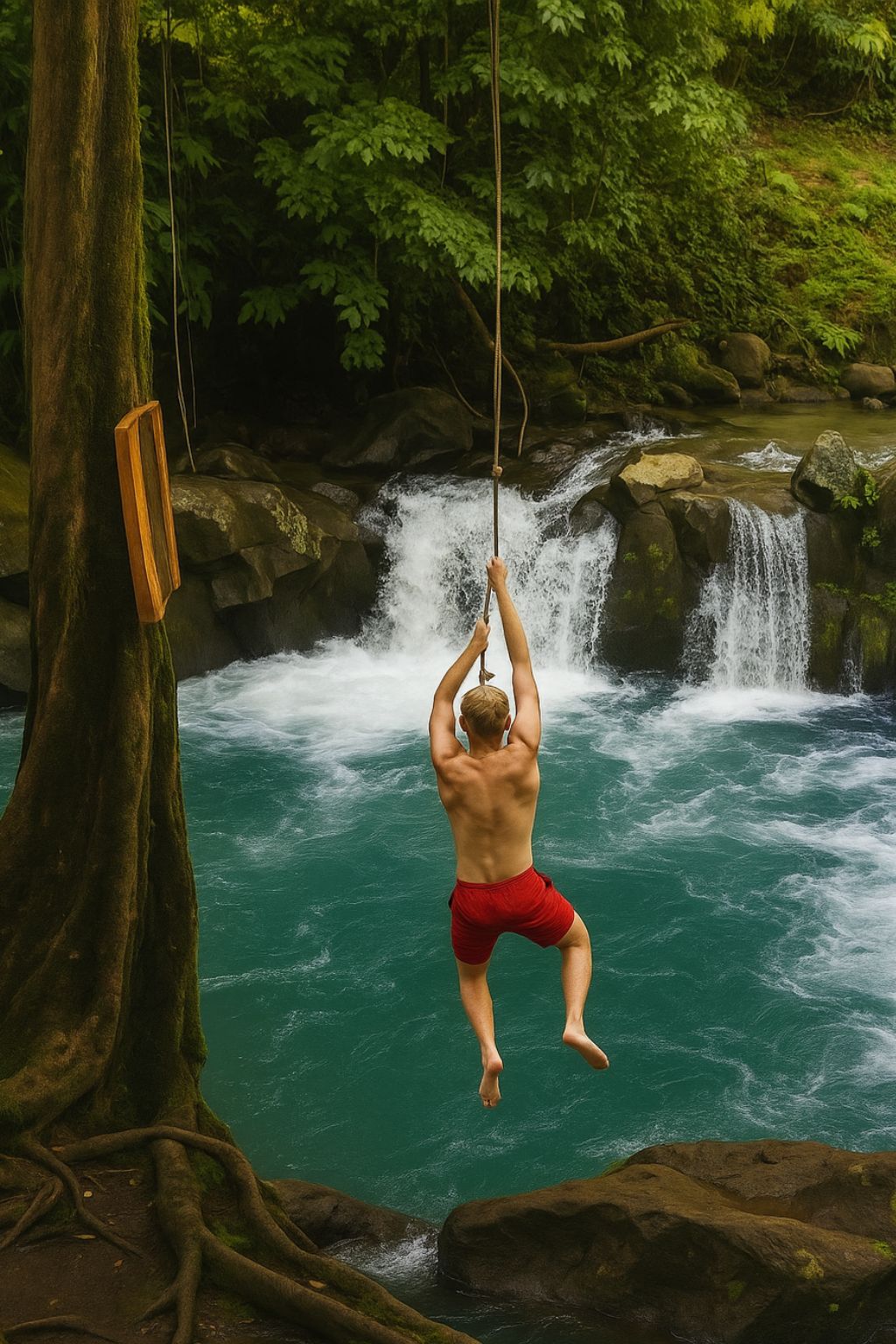
Basic swimming comfort matters for both, since both tours put you in natural pools and moving water. If you are not a confident swimmer, that is worth mentioning to the operator directly rather than assuming a life vest solves everything, particularly for the longer canyoning tour's deeper canyon sections. Beyond that, general good health and a reasonable comfort with heights are the main prerequisites, no technical climbing or rappelling background is expected on either tour.
Are There Age Or Health Restrictions For Rappelling And Canyoning?
Neither listing publishes a precise minimum age, but activities involving harnesses, rappelling, and cliff jumping typically carry age and health restrictions industry-wide, generally excluding pregnant travelers and those with certain heart, back, or joint conditions. Confirm current restrictions directly with the operator when booking, since exact policies can shift and this guide should not be treated as the final word on medical clearance.
Younger teenagers are commonly welcomed on the shorter rappelling tour given its beginner-focused design, while the extreme canyoning tour's higher rappel and bigger jumps make it a better fit for older teens and adults comfortable with more intense physical activity. Anyone with a fear of heights that goes beyond ordinary nerves should think carefully before booking either tour, since both involve real exposure to height with no way to opt out mid-activity once you are clipped into a specific rappel.
Solo travelers book both tours regularly, since the small-group, guide-led format means you are never doing this alone in any meaningful sense, guides and other travelers in your group are with you at every rappel and jump. If anything, the shared nervousness of a group facing the same first descent together tends to make the rappelling tour a natural way to meet other travelers during a solo Costa Rica trip, a side benefit beyond the activity itself.
If you have a pre-existing injury, are recovering from surgery, or have concerns about a heart or respiratory condition, a conversation with the operator ahead of time is the responsible move rather than assuming a general "beginner-friendly" label means every body is cleared for the activity.
How Do These Tours Fit Into A Multi-Day La Fortuna Itinerary?
The 3-hour rappelling tour is easy to slot into a half-day, leaving room for a hot springs visit, a waterfall stop, or simply an unhurried afternoon the same day. The 6-hour extreme canyoning tour is closer to a full-day commitment on its own, better planned as the single main activity for that date rather than paired with something else physically demanding.
Travelers spending three or more nights in La Fortuna sometimes build a rough progression: a lighter, drier activity like ziplining or the hanging bridges walk earlier in the trip, then rappelling or canyoning once they have a feel for how their body handles the tropical heat and humidity, and a rest day or hot springs afternoon afterward to recover. That order is not required, but it reflects how physically demanding the longer canyoning tour is relative to the rest of what is bookable in the area, and starting with something less intense gives you a more honest read on your own stamina before committing six hours to a canyon.
For travelers on a shorter visit, two or three nights, the 3-hour rappelling tour is generally the more realistic fit alongside everything else worth doing in that window: the waterfall, hot springs, and at least one wildlife or hiking activity. Squeezing in the full 6-hour canyoning tour on a short trip usually means cutting something else from the itinerary to make room.
How Does Canyoning Compare To The Other Arenal Adventure Activities?
Among the four core adventure products near Arenal, rappelling and canyoning are the most physically involved and the most water-focused, in contrast to ziplining's dry, platform-based format and ATV touring's seated, vehicle-based one.
| Activity | Price | Duration | Physical demand |
|---|---|---|---|
| 12-Cable Zipline | $107 | 2 hours | Low, mostly seated in harness |
| ATV Guided Tour | $130 | 2 hours | Moderate, coordination-based driving |
| Waterfall Rappelling | $105 | 3 hours | Moderate, repeated but manageable rappels |
| Waterfall Jumping & Extreme Canyoning | $108 | 6 hours | High, sustained physical activity all day |
Some travelers pair a lighter activity like ziplining earlier in their trip with canyoning or rappelling later, once they have gotten a feel for how their body handles the tropical heat and humidity, which factors into fatigue on longer physical days more than most first-time visitors expect.
The setting also differs meaningfully between all four. The zipline and ATV tours both operate on largely dry, engineered infrastructure, cables and platforms for one, private trail networks for the other, while rappelling and canyoning take place in a natural canyon environment shaped by the season's rainfall and river flow. That makes the two canyon-based tours feel more variable day to day, which is part of the appeal for repeat visitors who find the same activity delivers a slightly different experience depending on water levels.
What Should You Wear And Bring For Canyoning Or Rappelling?
Quick-dry athletic clothing you do not mind getting soaked, secured closed-toe water shoes or sneakers with good grip, and a way to protect any electronics you bring are the essentials. Cotton clothing is a poor choice since it stays wet and heavy for the rest of the day once soaked.
- Quick-dry shorts or leggings and a synthetic top, not cotton
- Closed-toe shoes that strap on securely and can get soaked
- A swimsuit worn under your clothes
- Sunscreen applied before you start, since reapplying mid-canyon is not practical
- Cash for guide tips and a dry bag or waterproof phone case if you want photos
| Item | Priority | Notes |
|---|---|---|
| Quick-dry athletic clothing | Essential | Cotton stays wet and heavy the rest of the day |
| Secured closed-toe water shoes | Essential | Needed for grip on wet rock and canyon terrain |
| Swimsuit worn underneath | Essential | You will be in pools and moving water repeatedly |
| Sunscreen, applied before starting | Essential | Reapplying mid-canyon is not practical |
| Cash for guide tips | Recommended | Standard practice on guided adventure tours in this region |
| Dry bag or waterproof phone case | Optional | Only if you want photos; otherwise leave electronics behind |
| Change of clothes for after | Recommended | You will be soaked by the end of either tour |
Leave anything you cannot afford to lose in the canyon at your hotel. Both tours include gear (harnesses, helmets, ropes) and both include a meal, so you do not need to bring food or rappelling equipment of your own.
When Is The Best Time Of Year For Canyoning Near Arenal?
Both tours run year-round, though water volume and canyon conditions shift with the season. Dry season, roughly January through April, tends to bring lower, clearer water and more predictable conditions, while green season, May through November, can bring higher water volume in the falls, which some guides and repeat visitors find makes the rappels and jumps feel more dramatic.
Because both tours operate in a canyon environment, heavy rain can occasionally affect a specific day's conditions or scheduling more than it would for a zipline or ATV tour on fixed infrastructure. Booking a day or two of flexibility into your itinerary during green season, rather than scheduling canyoning for your only free morning, is a reasonable hedge against a weather-related reschedule.
Water temperature stays warm year-round given the region's tropical elevation and climate, so cold is not a real factor in either season the way it might be for canyoning in a temperate destination. The bigger seasonal variable is simply how much water is moving through the falls, which affects the visual drama of the rappels more than it affects safety, since operators would not run a route they consider unsafe at higher water levels.
How Do The Two Tours Compare On Value For The Price?
Both tours price within three dollars of each other, $105 for rappelling and $108 for extreme canyoning, despite the canyoning tour running twice as long. On a per-hour basis, rappelling is the pricier option, but that comparison misses the point: you are not paying by the hour, you are paying for a specific kind of day, and the shorter tour's higher per-hour cost reflects its 5-star track record and beginner-focused design more than a lack of content.
Travelers weighing the two purely on dollars per hour of activity should book extreme canyoning. Travelers weighing them on which experience they will actually enjoy, given their fitness, comfort with heights, and available time, should use the earlier comparison in this guide rather than the math alone. A great trip is the one that matches your comfort level, not the one with the lowest hourly rate.
Is It Worth Tipping Your Canyoning Or Rappelling Guides?
Yes, tipping is customary and not included in either tour's listed price. Canyoning and rappelling guides are managing safety-critical equipment, setting ropes, and physically assisting nervous first-timers through descents and jumps all day, work that carries real responsibility beyond simply leading a walk.
As with ziplining and ATV touring elsewhere in this region, there is no fixed standard amount, and how much feels appropriate depends on group size and how many guides worked your tour. Bringing cash set aside specifically for tipping, rather than assuming it is covered by the price you already paid, is the practical norm most repeat visitors to La Fortuna's adventure tourism scene follow.
Choose Your Activity Date
La Roca Waterfall Rappelling: Choose a shorter guided waterfall descent with supplied technical gear.
Use the provider’s calendar to select your date, party and departure. Live availability is checked on the booking page.